
PROJECT STRATEGIES THAT WORK!


NEED HELP DELIVERING TRANSFORMATION?
KEEP LEARNING
The Anti-Retail Retail Club

CultureSparq.com | We Build The Culture!
What is the Anti-Retail Retail Club?
The Anti-Retail Retail Club consist of shoppers unwilling or unable to associate in a loyal way with other retailers that don’t provide a seamless digital experience. But they increase brand awareness and loyalty with retail brands that do.
Data Fact
20%-70% of newly acquired customers defect in the first 100 days of the relationship
Customer Loyalty
Customer loyalty is about attracting the customers to your product or service, getting them to buy and finally who in return can bring you even more customers.
More than ever, customers are seeking a memorable or remarkable experience they can share with their network.
Your loyal customers are the ones who are going to buy your products even if they aren’t on sale and recommend your offerings to friends, and you always want that audience to be large enough to keep you afloat.
How are you increasing customer loyalty?
Today’s consumers have more access than ever to the best products, the latest technologies, and the coolest brands for pretty much any need.
However, they don’t always have access to a seamless shopping experience, in part because retailers been slow to embrace Sparq Worldwide Unified Commerce strategy.
At CultureSparq we help brands deliver a Unified Commerce Experience to increase that brand loyalty and stays out of the anti-retail retail club.
No matter how or where your customers are shopping you should have a combination of e-commerce, mobile commerce, order fulfillment, inventory management, customer relationship management (CRM), and other technologies working together on a single platform.
Here are a few insights to help you stay in the loop with what customers are going to be looking for in the coming year.
Use a Simple Points-Based System: Put a loyalty program methodology in existence so your frequent customers can earn points that offers some type of reward such as a discount code, freebie, or other type of special offer.
Pop-up stores: Get your customer attention with Pop-up shops. This is a great method for building an organic brand awareness and recognition. To put some respect on your brand name, you can form partnerships with another company to provide all-inclusive offers.
Get Personal: Don’t ignore the customer emotional journey. Get intimate and make your customers feel special by creating a personalized experience with your product to generate customer feedback loops which creates special interaction for customers when they feel they are being heard.
Our Digital Transformation Journey in retail reimagines how a retailer uses Culture, Data and Technology to pursue new and improved revenue streams and new business models.
CultureSparq is removing significant obstacles faced by retailers that embark on a digital transformation journey.
Take some time today to contact us so we can share how we can transform your organization and keep your customers loyal.
If you need deeper insights, please schedule a 1-on-1 with Chris Campbell to learn how we are mobilizing a winning culture.
We Build The Culture!
Why You’re Not Done With Digital Transformation

We Build The Culture | CultureSparq.com
The Journey continues towards building a foundation of Systems.
WHAT IS A SYSTEM?
Simply put, a system is a combination of People, Process and Tools all trying to achieve an outcome.
BUILDING YOUR SYSTEM
We need to understand the benefits of what “building your system”does for your business. One benefit of this often unifies the problem solving and decision making of the organization to building a system — it allows you to figure out what is the first brick you will need to systematize in your business (e.g., on-boarding, deployments, content distribution, tools, etc) so you can optimize effectively.
A second benefit is having the ability to connect all of your organization's intricate parts and interrelated steps to work together for the achievement of the business strategy.
How do you do this? We like to share a few insights with you, on how CultureSparq will work with your brand to help build your systems to accelerate your Digital Transformation Journey. First, let’s look at how we approach building System in regards to areas that can help your business deliver quick wins.
We start with a proven framework that’s essential for any Digital Transformation Journey to achieve success. We then design and launch proof-of-concepts so you can learn, validate and scale your investments quickly.
To begin building your system , we encourage you to start doing these three simple POCs:
1. MOBILIZE PEOPLE
DELIVER AN AGILE DEPLOYMENT PROCESS
You want to turn great plans into great realities. There is a proven way to build agile teams (i.e., DevOps Teams or Product Teams) so your strategy deployment doesn’t feel like an uncharted journey through the wilderness. Agile allows you to manage complex projects and focus on collaboration, customer feedback, and small, rapid releases. And, we grow it organically.
Data Point: Most studies show that organizations are adopting Agile as the main solution to fix all their problems — thus the reason why so many agile transformations fail. Agile doesn’t solve every problem.
We are helping CEOs use Agile to develop software better, faster, and cheaper. For more information on our managed service model check out SparqWorldwide.com.
2. AUDIT PROCESS
DELIVER AN INSTANT PROCESS/ SOP
This is the Process for creating alignment. You have a specific way things need to be done and many times it feels faster to just do it yourself. This is an easy way to get your thoughts out of your head for others to follow.
Our Standard Operating Procedures (SOPs) audits your current documented processes your company has in place to ensure that services and products are delivered consistently every time.
Data Point: Organizations that don’t optimize their SOP process will make slower decisions. Which limits the enterprise to grow further—faster, in every aspect of the business.
3. CONSOLIDATE TOOLS
DELIVER A CONSOLIDATED AND AUTOMATED BI PLATFORM. You want to consistently measure and improve customer satisfaction. This is achieved by addressing simplification, standardization and governance processes holistically with the end result being a BI platform that is flexible, extensible and customizable. The advantages of our tool consolidation POC can strengthen your core infrastructure by modernizing your legacy operating systems to drive efficiency.
Data Point: Studies show that organizations with low BI tool consolidation have fewer employees (~12%) using BI tools vis-a-vis organizations with high BI standardization and consolidation having more employees (~25%) using BI tools.
When it comes to creating a digital business, Culture, Data and Technology are the change blocks that must be addressed to bring about the changes you desire throughout your digital transformation journey.
If you need deeper insights, please schedule a 1-on-1 with Chris Campbell to learn how we are mobilizing a winning culture.
Let’s get on a call.
What's Your Culture Worth - A Popup Webtalk with Chris Campbell
Digital Transformation Journey

Digital Transformation Explained
Digital transformation is about modernizing your infrastructure so your organization can evolve and thrive in all aspects of your business — what it offers, how it interacts with customers and how it operates.
Simply put, Digital Transformation is how to sustain a business through constant change.
Here's how CultureSparq works with brands all over the world to become digital enterprises.
Mapping The Journey
Before we dive in, we need a little context. We need to understand the notion of “mapping the journey” from end-to-end and executing it iteratively via our Sparq Model; a lean framework concept that is essential for understanding the connection between enterprise agility and digital transformation. “Mapping the journey” is comprised of three perspectives: Culture, Data and Technology.
1. Culture
Reimagine your digital workforce
Companies that build a culture to embrace agility and executes change management principles can reduce risk and ensure business continuity.
Our data shows digital transformations continue to fail due to the lack of talent and a disconnect between C-Suite and the rest of the organization. We are helping companies reimagine their digital workforce by mapping and clarifying people skills to develop a world-class team of digital transformation experts who can both design and implement the solutions needed for scale.
Leaders must mobilize a winning culture by focusing on elevating People, Process, Strategy.
How: This requires knowing the Emotional IQ of your workforce.
2. Data
The role of data
By making data quality management and governance the currency of digital transformation initiatives, organizations can leverage the value of their data to unlock new opportunities, including support for new business models, improved customer service and use artificial intelligence and machine learning to discover new insights.
We find data quality can be maintained at high levels by driving ownership of the data to the people who use it most frequently and understand it the best -- typically at the business level.
Leaders must use data to dominate every step of the journey towards a digital enterprise.
How: Bring Artificial Intelligence and Machine Learning to solve business problems.
3. Technology
Identify, Automate and Deliver
Digital leaders set themselves apart and create a clear competitive advantage by implementing the right technologies at the right time with a specific strategy and clear roadmap. From selecting a private or hybrid cloud strategy to adopting tools that make it easier to plan, track, and report across all teams, programs, software portfolios, and the enterprise.
Our research shows digital technologies must support the overall business objectives and compliment the transformation goals companies are working towards. Digital technologies exists to help organizations take the next step in their transformation processes by automating processes so the workforce can focus on more important, high-level tasks.
Leaders must integrate digital technology into their business operations to identify new revenue opportunities, increase customer outreach, and deliver better value to their customers.
How: Strengthen your core infrastructure by modernizing your legacy operating systems to drive efficiency.
When it comes to creating a digital business, Culture, Data and Technology are the change blocks that must be addressed to bring about the changes you desire throughout your digital transformation journey.
Let’s get on a call.
Building a DevOps Culture
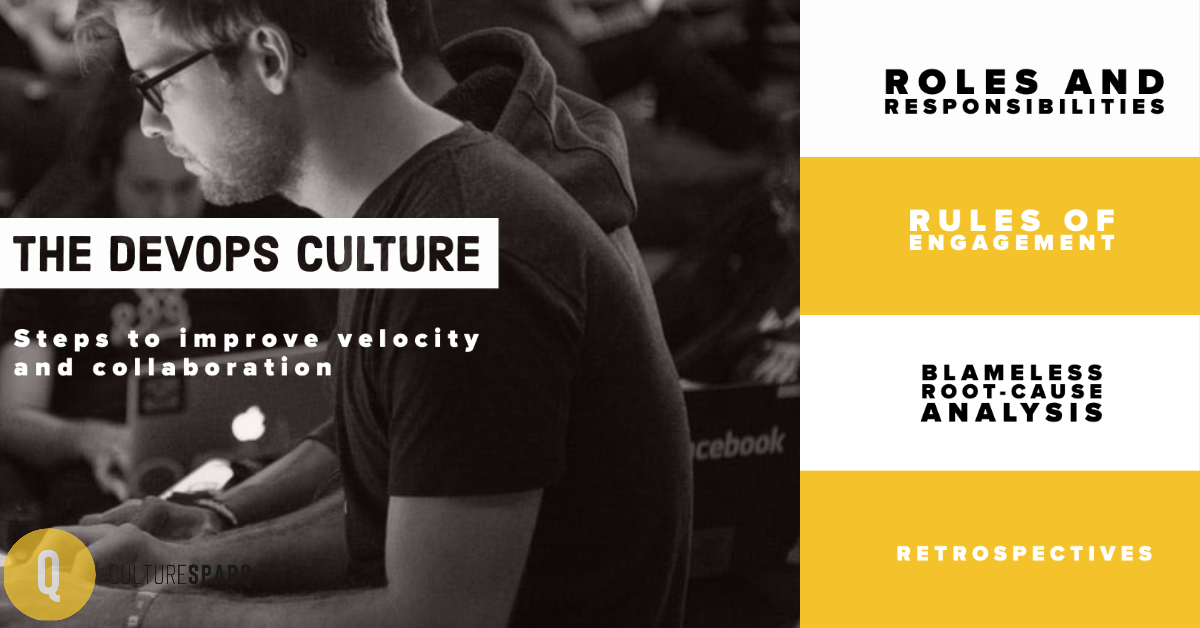
At CultureSparq, our DevOps practice is a cultural movement; it's all about putting people first. Companies might adopt the most efficient processes or automated tools possible, but they're useless without the people who run the processes and use the tools. Therefore, building a culture is at the core of adopting the Methodology is what makes DevOps a success.
So what do we know about DevOps culture? As you already know We Build The Culture pretty well and we like to characterized DevOps as a collaboration across roles, focus on business instead of departmental objectives, trust, and value placed on learning through experimentation. Building a culture isn't like adopting a process or a tool. It requires the social engineering of a squad of people, each with unique predispositions, experiences, and biases.
This diversity can make culture-building challenging but we have just the right leaders to help you overcome them.
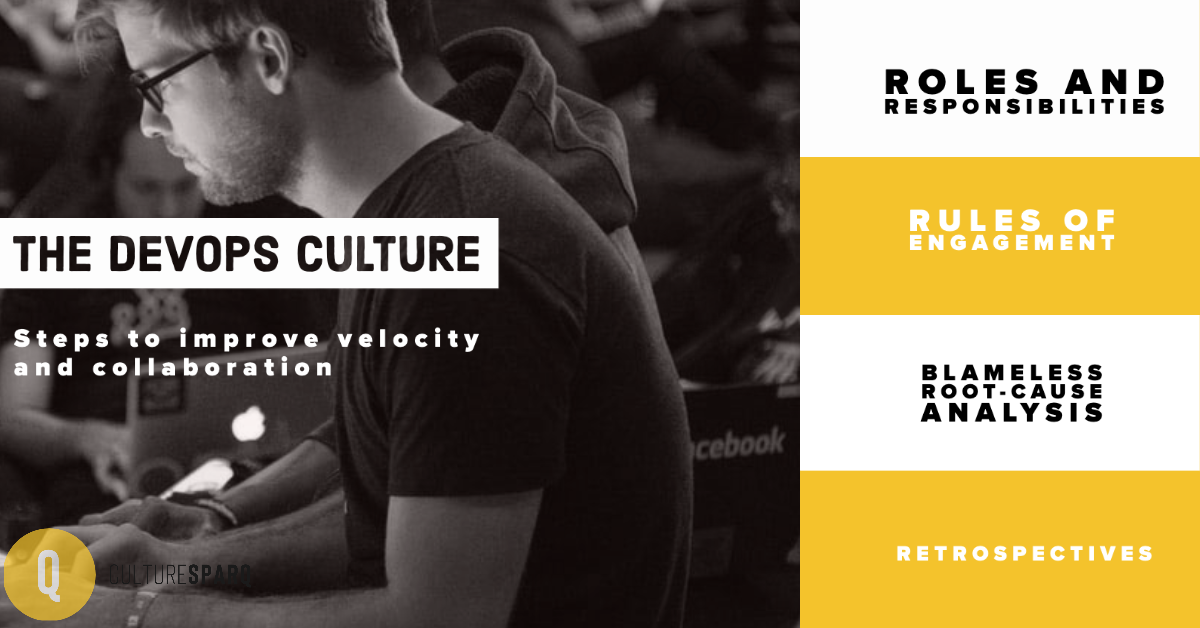
Let’s get on a call and in the meantime click on the image to learn more.
At CultureSparq, our DevOps practice is a cultural movement; it's all about putting people first. Companies might adopt the most efficient processes or automated tools possible, but they're useless without the people who run the processes and use the tools. Therefore, building a culture is at the core of adopting the Methodology and is key to making your DevOps a success.
So what do we know about DevOps culture? As you already know We Build The Culture pretty well and we like to characterized DevOps as a collaboration across roles, a focus on business instead of departmental objectives, trust, and value placed on learning through experimentation.
Building a DevOps culture isn't about just adopting a process or a tool. It requires the social engineering of a squad of people, each with unique predispositions, experiences, and biases.
This diversity can make culture-building challenging but we have just the right leaders to help you overcome them. Let’s get on a call!
Schedule a 1-on-1 with Chris Campbell to learn how we are mobilizing a winning culture.
CultureSparq.com | We Build The Culture
